
spatial peace™ consultation
explore the range of services designed to help you move forward into your next project with confidence, literally building peace for the clients you serve.
pl
what i offer
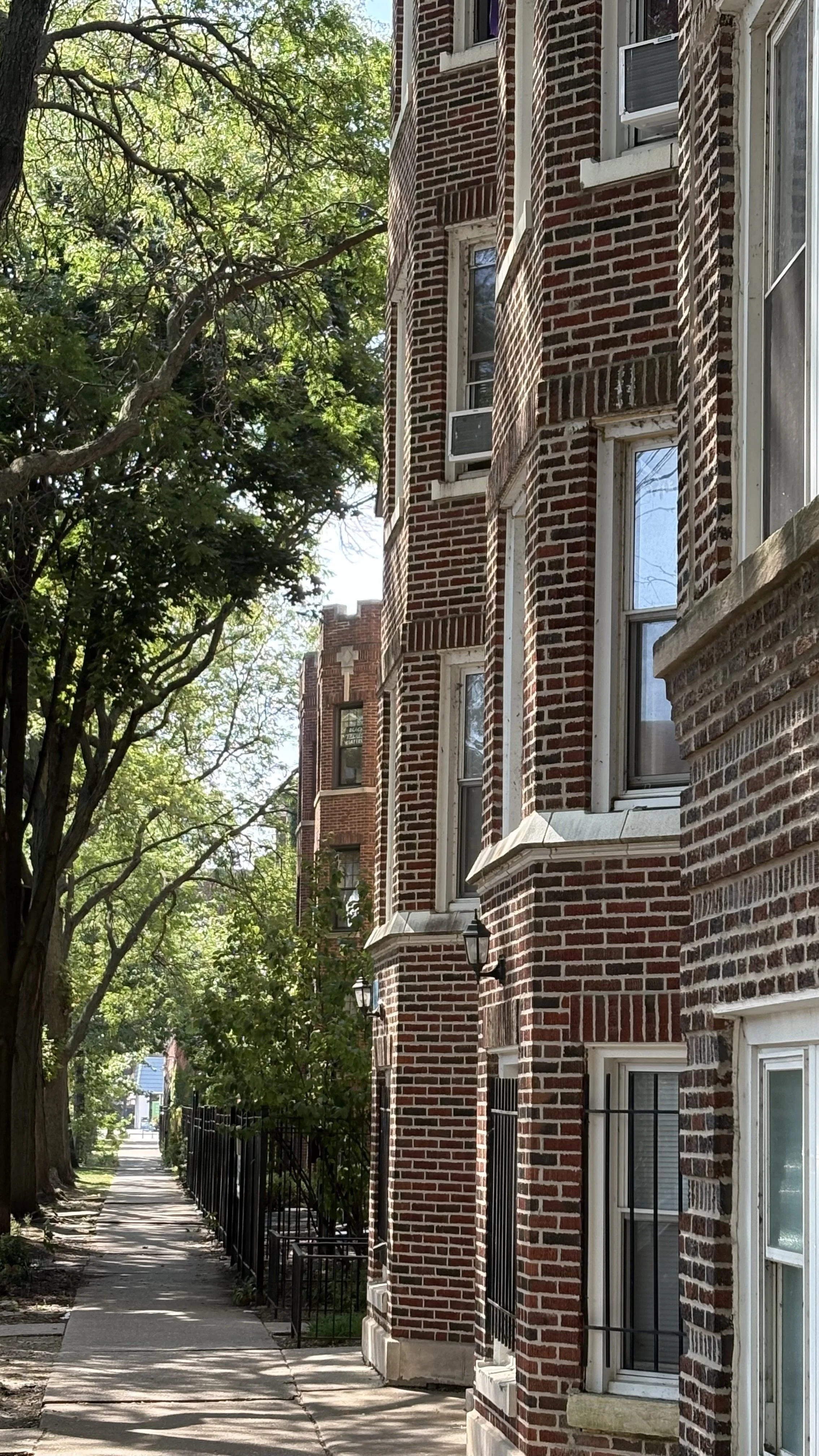
spatial peace™ is the condition in which the design, distribution, and governance of physical space actively supports the social foundations of peaceful community life — trust between residents, cross-community encounter, psychological safety, civic belonging, and equitable access to shared resources. it is the scholarly framework i developed in my doctoral research, published in Cities (2024), and synthesized in the my book A Time for Peace: a paradigm shift and practical guide (2026).
as you well know, the built environment is not neutral. every spatial decision an architecture and design firm makes — how a lobby is arranged, where entrances are placed, how light falls, which communities a building turns toward or away from — either cultivates or forecloses the conditions for peaceful social life. spatial peace consulting gives firms the analytical tools, research methods, and facilitation capacity to make those decisions intentionally.
consult options
-
$6,500-$12,000 per assessment
Before design begins, i will conduct a systematic assessment of the social and spatial conditions at and around a project site. Drawing on environmental scan methodology developed across Chicago, Washington D.C., Salt Lake City, and London, the assessment maps community dynamics, existing tensions, trust deficits, and relational needs the design must address.
Deliverable: written assessment report with design implications.
FEE RANGE FACTORS
Lower End ($6,500): Single-site project; site within metro; community data largely available; no significant historical conflict
Upper End ($12,000): Multi-site or complex urban context; significant community conflict history; multiple language communities; extensive stakeholder mapping required; travel outside metro area
-
$4,500 – $9,000 per engagement
Deep listening and facilitation are core competencies developed across more than a decade of peacebuilding practice in four countries. I will facilitate a structured community engagement processes that surface knowledge held by building users and neighbors, build social trust necessary for inclusive decision-making, and produce actionable design input.
Deliverable: facilitated session design, summary of community input, recommendations for design team.
FEE RANGE FACTORS
Lower End ($4,500): Single facilitated session; accessible community; no significant translation needs; 1–2 reports
Upper End ($9,000): Multiple sessions (2–3); multilingual facilitation coordination; evening or weekend sessions; significant documentation and synthesis; adversarial or conflict-affected community context
-
$3,500 – $6,500 per review
Developed proposals are evaluated against a structured spatial peace rubric: Does this design support or hinder cross-community encounter? Does it signal inclusion or exclusion to historically marginalized populations? Does it distribute access equitably? Does it create conditions for social trust or undermine them?
Deliverable: annotated design review with spatial peace criteria scoring and recommended revisions.
FEE RANGE FACTORS
Lower End ($3,500): Schematic or design development stage review; single building; standard program
Upper End ($6,500): Construction documents stage; complex civic or mixed-use program; multiple building types or phases; significant equity analysis required
-
$3,000 – $5,500 per workshop day
Structured workshops for clients, building users, civic partners, and internal design teams — grounded in spatial peace theory and placemaking research. Topics include: Cultures of Peace and Space; Societal Healing and the Built Environment; Placemaking as Peacebuilding; Listening, Hospitality, and Inclusive Design.
Deliverable: custom workshop series design and facilitation.
FEE RANGE FACTORS
Half-day workshop ($3,000 flat): 3 hours; single audience group; standard topic from available list
Full-day workshop ($5,500 flat): 6 hours; up to 30 participants; custom content; synthesis memo included
Series of 3+ workshops: 15% series discount applied to total
Travel: within Chicago metro included; outside metro — travel at cost plus $350/half-day travel time
-
$9,500 – $18,000 per assessment
After project completion, i will design and conduct a structured assessments measuring whether the space is producing the social outcomes it was designed for: trust, encounter, belonging, civic engagement, reduced conflict. Drawing on validated positive peace indicator methodology, the assessment provides rigorous evidence of social impact.
Deliverable: post-occupancy impact report suitable for client reporting, grant applications, and public communication
FEE RANGE FACTORS
Lower end ($9,500): Single-building; limited number of user populations; standard survey methodology; report only
Upper End ($18,000): Multi-building or campus; multiple distinct community populations; multilingual data collection; behavioral observation component; full quantitative and qualitative analysis; presentation + funder-formatted report
retainer advisory
-
$2,800 / mo 3-month minimum
Up to 3 hours/month consultation by phone or video
Email access within 48-hour response window
Review of one design proposal per month against spatial peace criteria (brief memo format)
Annual re-rate review and renewal option
-
$5,200 / mo 6-month minimum
Up to 6 hours/month consultation including in-person meetings (metro)
Priority response window (24 hours)
Attendance at up to 2 client/project meetings per month
Full design review (one project per month) with annotated memo
One half-day workshop per quarter included
Discounted rate on discrete project engagements: 15% off list
-
$8,500 / mo 12-month minimum
Up to 12 hours/month; up to 4 in-person sessions
Named as Spatial Peace Consultant on firm capability statements and project proposals
Participation in business development meetings with civic clients
Full design review on all active projects
Pre-design assessments on up to 2 projects per year (included)
One post-occupancy assessment per year at 25% off list
Co-authorship on case studies and thought leadership
Discounted rate on all additional services: 20% off list
the spatial peace scales© tool
an operational instrument for measuring positive peace in the built environment
the Spatial Peace Scales© are a 45-measure operational instrument that turns the theoretical framework of spatial peace into something practitioners can actually use. where the ABC’s of Measuring Positive Peace (2022) and the Cities (2024) articles established the conceptual foundation, my exploratory dissertation delved deeper into just how spaces and places can either support or undermine the conditions for peace, and general community well-being, in practice. the logical next step was the crafting of the Spatial Peace Scales. and with their creation, spatial peace conditions are now trackable for a site, a proposal, a block, or a neighborhood. each measure in the Scales is anchored to specific observable behaviors and conditions, scored on a 0–5 scale, and mapped to one of five spatial peace domains: belonging, trust, access, civic voice, and connection.
the instrument is organized across three interrelated tiers — the Built Project (20 measures focused on the physical site itself), the Biophilic Imprint (10 measures focused on ecological and sensory dimensions), and Community Connectivity (15 measures focused on the social and civic conditions surrounding a site). together they assess the full spatial peace condition of a site — from the interior sensory experience through ecological integration to the community's social and civic health. the Scales can be applied at four scales of analysis: institutional, neighborhood, municipal, and organizational.
the Scales draw on community-based research methodology, peer-reviewed literature, and applied fieldwork. they were built to address a specific gap i documented in my doctoral research: standardized peace and well-being measures often obscure the lived experience of the people they claim to describe. the anchored behavioral descriptors and the multi-tier structure are designed to make community-validated measurement possible without flattening difference.
the Spatial Peace Scales© are a working instrument — built, tested, and open for use in consulting engagements with architecture firms, school districts, civic bodies, and nonprofits. they are also available for academic research collaboration, particularly partnerships interested in operationalizing positive peace or community well-being at the neighborhood and municipal scale. if you'd like to learn more, or to discuss whether the Scales might be useful in your context, please reach out.


problems firms can face
projects designed without peace metrics and processes . . .
no present framework for measuring social and civic impact . . .
spatial inequality isn’t considered in the design brief . . .
stakeholder engagement often treated as compliance . . .
rare post-occupancy social assessments . . .
. . . which can lead to resistance, conflict, and underuse after completion
. . . which often means clients cannot demonstrate the social return on investment
. . . which means that projects too-often reinforce existing exclusions unintentionally
. . . . that results in missed vital knowledge, missed trust, and missed outcomes
. . . which means firms cannot demonstrably prove the value of their work
measurable impacts
Architecture and design firms make decisions every day that shape whether people feel safe, welcome, and connected in the spaces they inhabit — or whether they don’t. Most firms make those decisions without a framework for thinking systematically about peace. I have spent the last decade building that framework, and I am writing to explore how it might serve your work.
The built environment is one of the most powerful and underused tools for peacebuilding that exists. I believe design firms that understand this have a genuine competitive advantage — in the quality of their community engagement, the social durability of their projects, and their ability to win work from clients who are increasingly being asked to account for the civic and social impact of what they build. I would welcome a conversation about what a spatial peace consulting relationship might look like for your firm and your clients.
for the firmdifferentiated market position as a peace-centered design practice
stronger community engagement outcomes and project approvals
new consulting service revenue stream
competitive advantage in public, civic, and mixed-use sectors
for the clientevidence-based social impact reporting for funders and stakeholders
reduced post-occupancy conflict and community resistance
alignment with ESG and civic impact mandates
a rigorous framework for articulating the human value of design
for the communityspaces that reduce conflict and foster belonging from day one
equitable access to well-designed civic and public space
communities co-authoring the spaces that shape their lives
trust between communities and the institutions that build for them
let's build spatial peace™
If you're interested in building peace together, complete the form with a few details about your project. i'll review your message and get back to you soon.